

Imaginary Friends (also known as pretend friends or invisible friends) are a psychological and social phenomenon where a friendship or other interpersonal relationship takes place in the imagination rather than in external physical reality.
Children invent Imaginary Friends to express their difficulties and practice social interaction before experiencing it in real life. Imaginary Friends can also help children cope with fears, explore ideas, or gain a sense of competence by learning from or taking care of their imaginary friends.
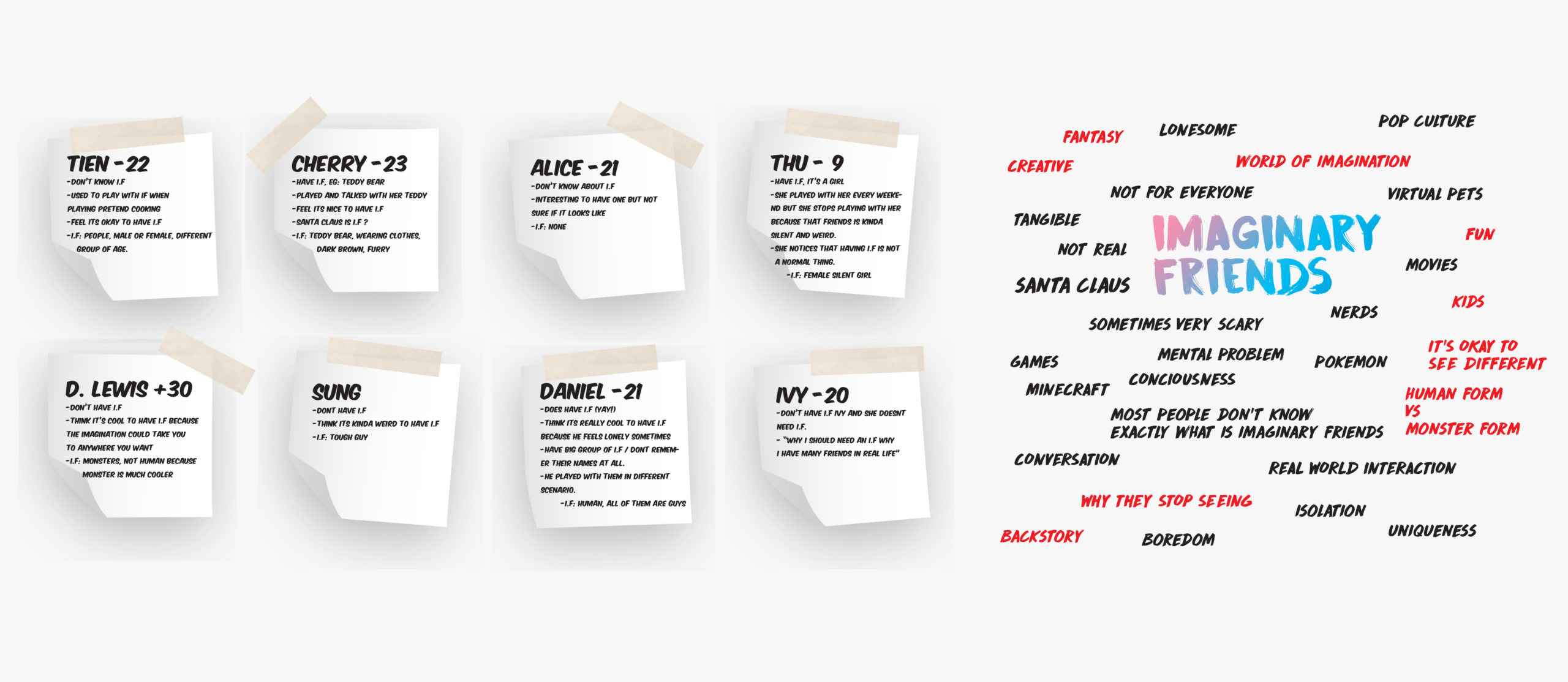
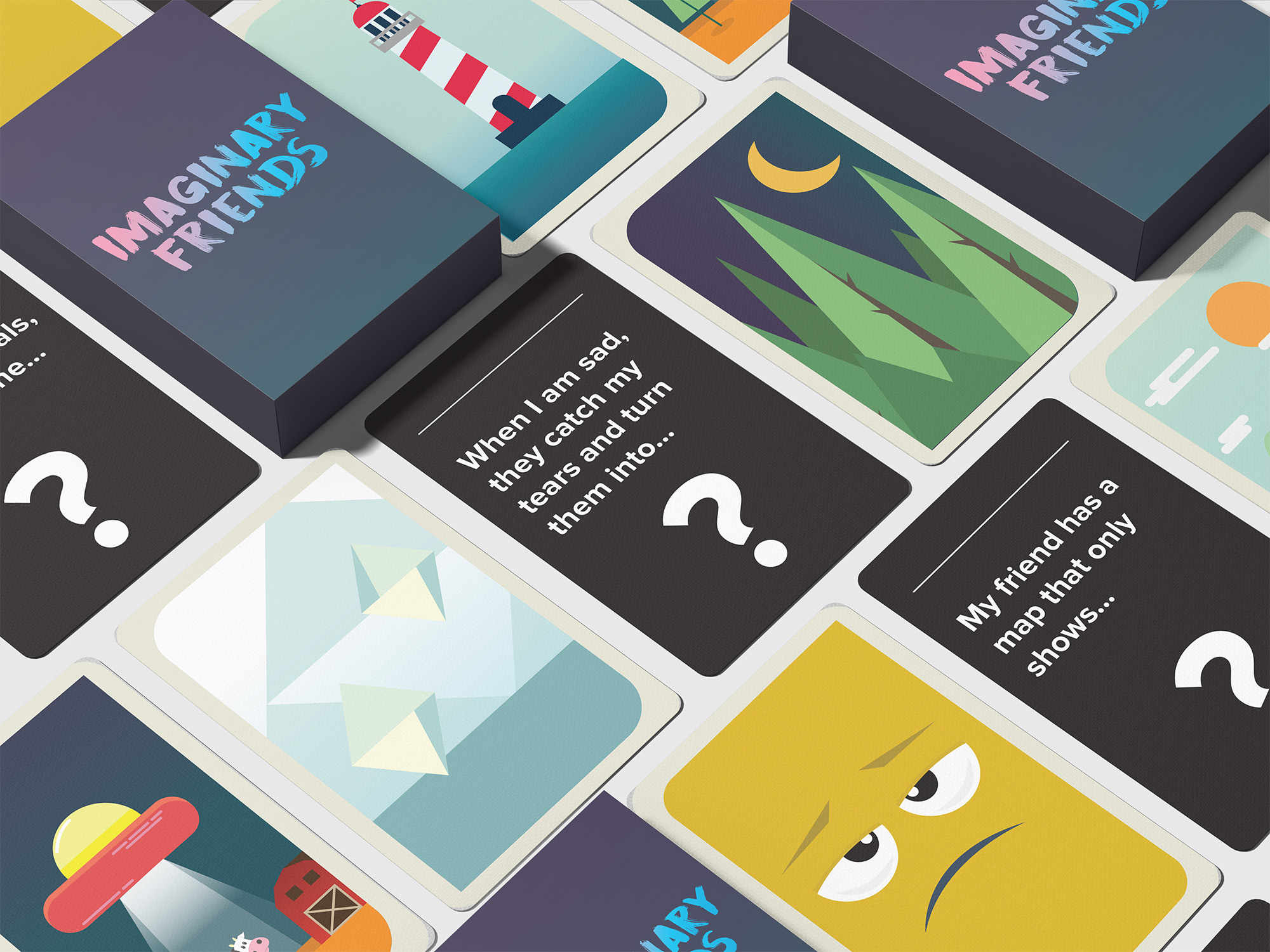
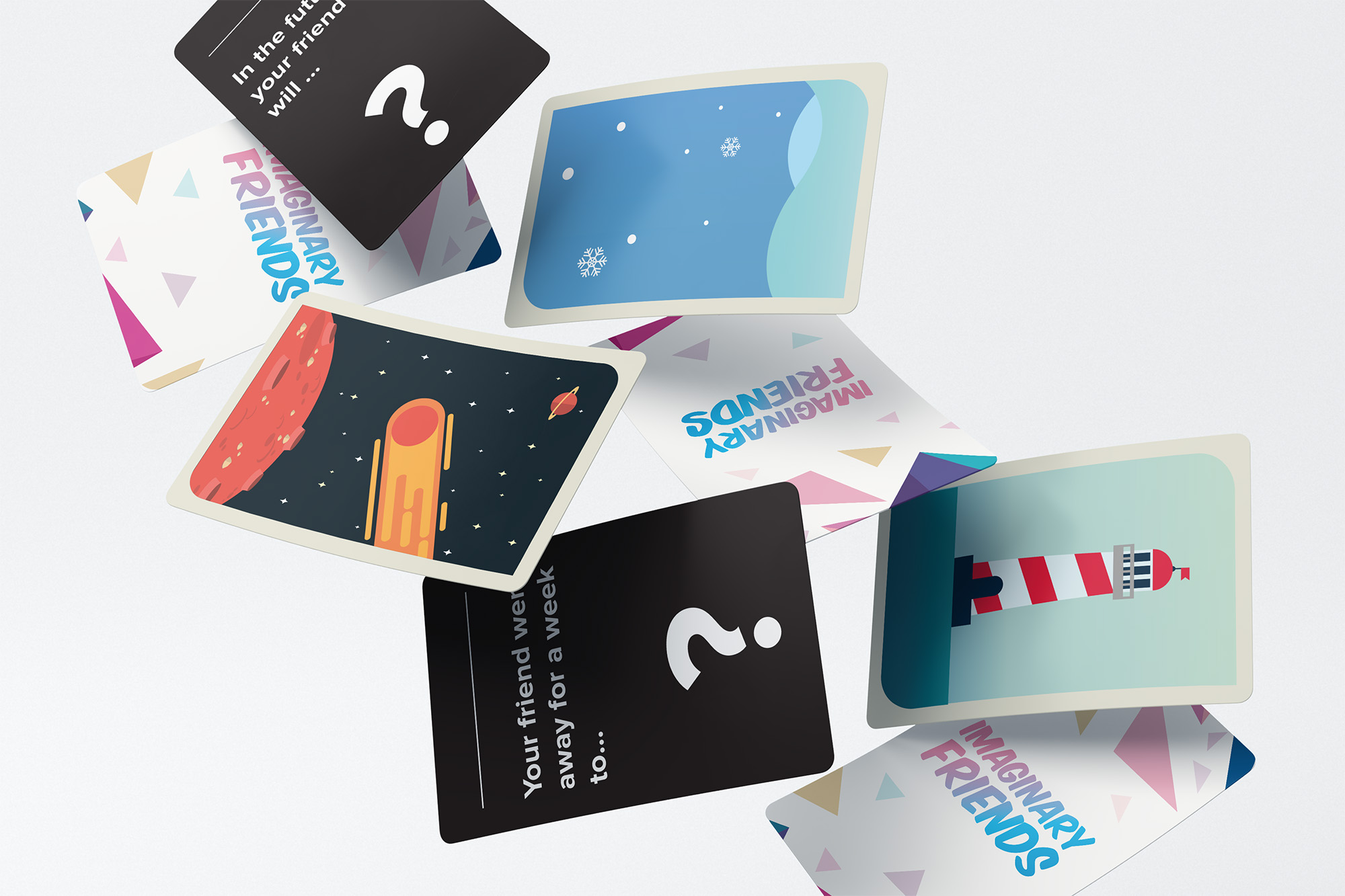
Inspired by the well-known game Cards Against Humanity, I designed a card game for friends and families to create and interact with Imaginary Friends. This game encourages players to engage their imagination and creativity in a fun, social setting.
With the potential for freedom in gameplay, players create Imaginary Friends using contextual information based on their intuition and point of view. By relying on these narrative elements rather than more constructed stories and texts, the game’s narratives invite variation and creativity, making these elements integral to the gameplay experience. The design aims to foster imaginative play and social interaction, providing a unique and enjoyable way for players to connect and explore their creativity together.
Conceptual Framework
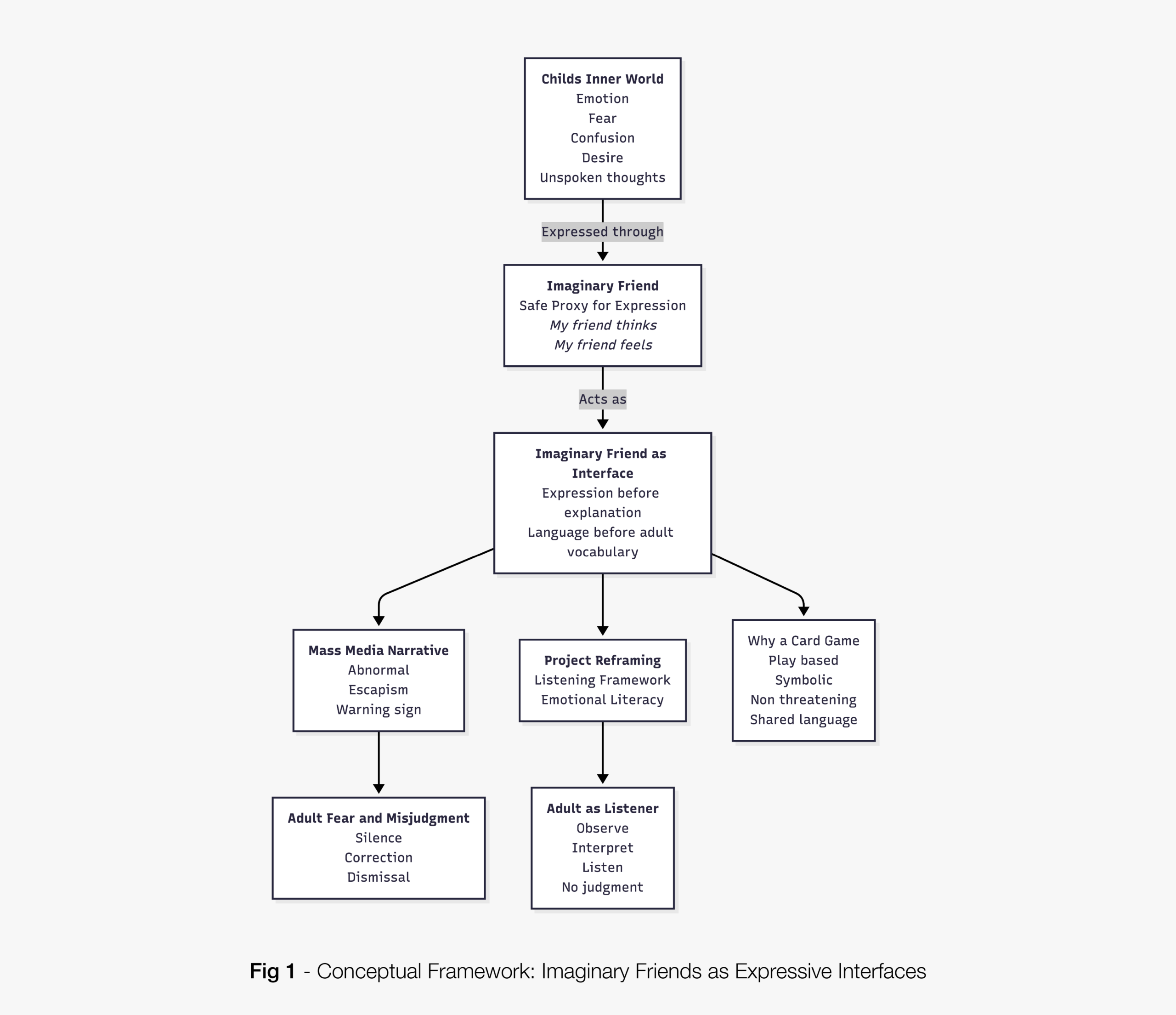
This framework synthesizes psychological and social research that positions imaginary friends as mechanisms for emotional expression, self-regulation, and social rehearsal rather than escapism or pathology. By mapping the relationship between children’s internal emotional states, the use of imaginary friends as narrative proxies, and the ways adults and mass media often misinterpret these behaviors, the diagram exposes a critical communication gap: children externalize complex feelings through imagination, while adults tend to evaluate those expressions through literal or diagnostic lenses. The model highlights how this mismatch can lead to premature judgment or dismissal, interrupting opportunities for understanding. Framing imaginary friends as an expressive interface allows the project to shift focus from correcting behavior to interpreting meaning, establishing a foundation for a listening-oriented system rather than a problem-solving one.
Interaction Flow
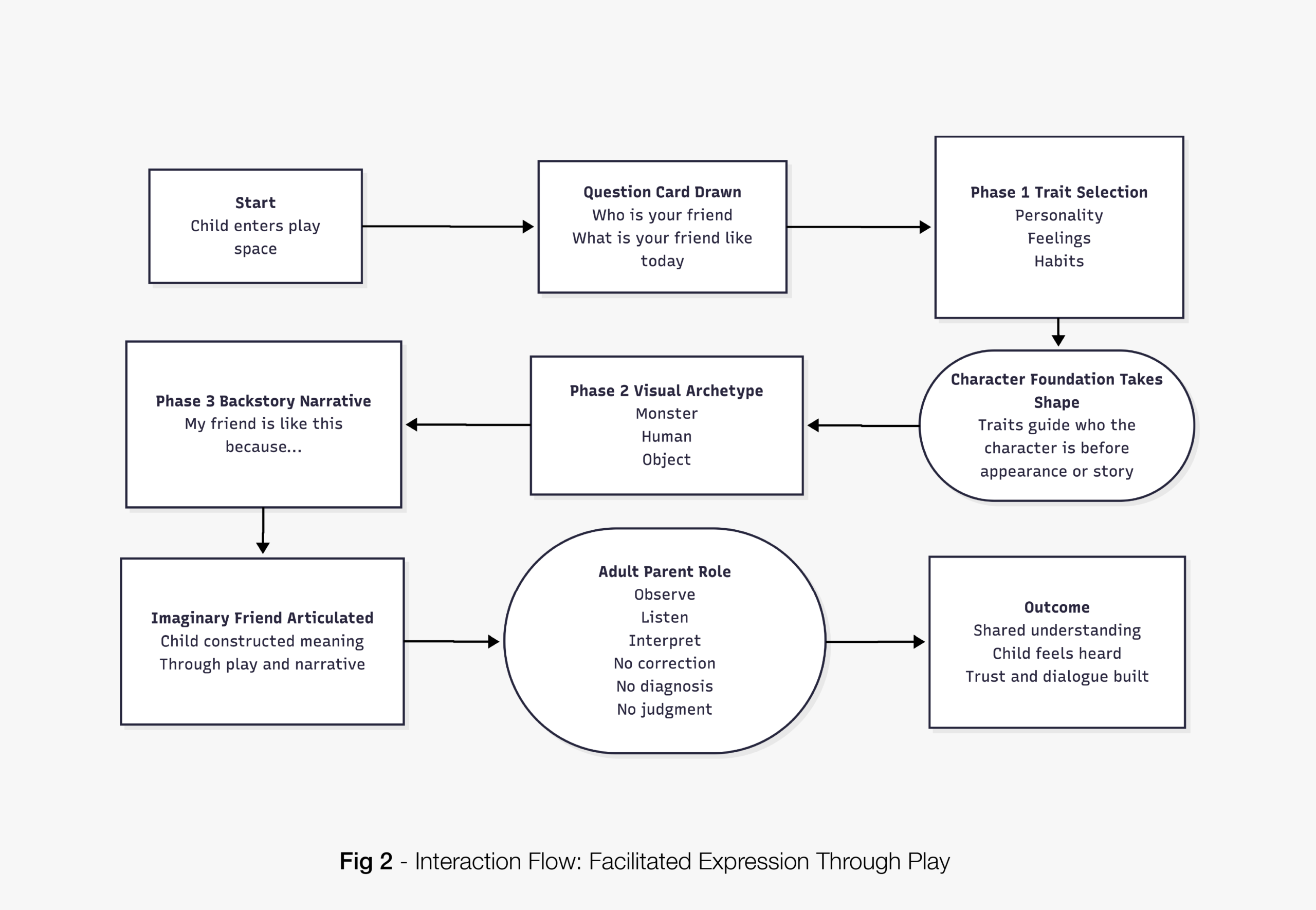
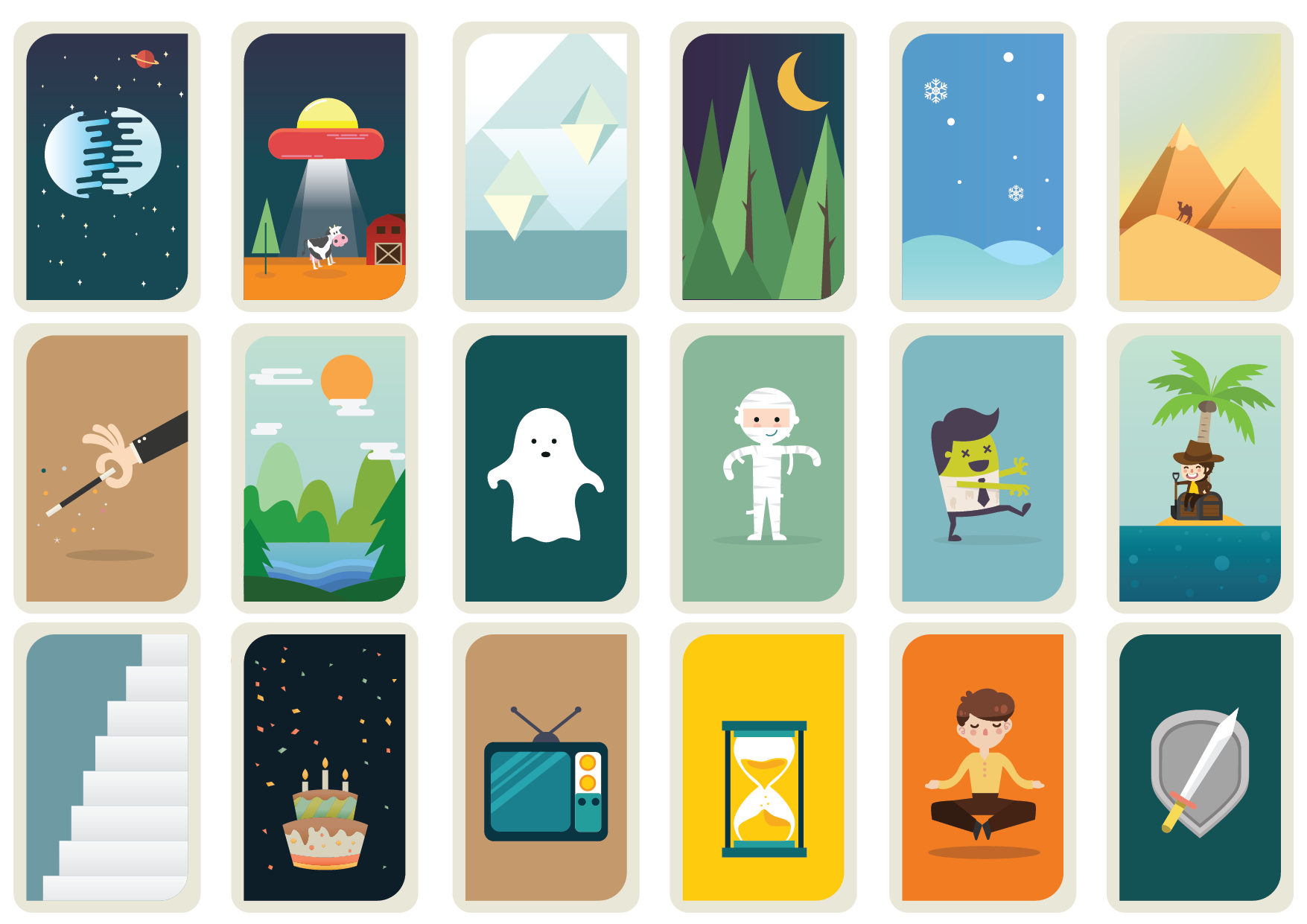
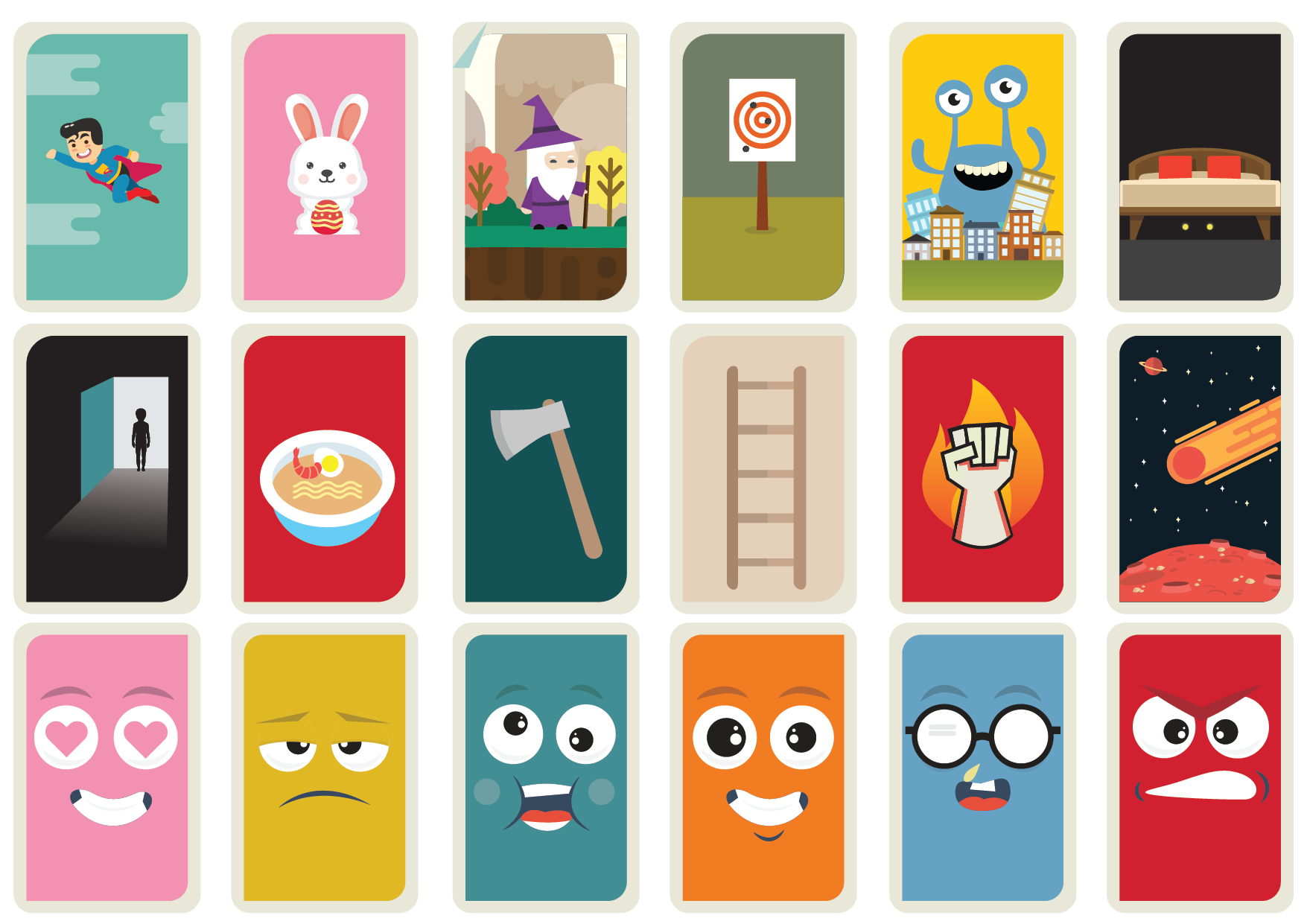
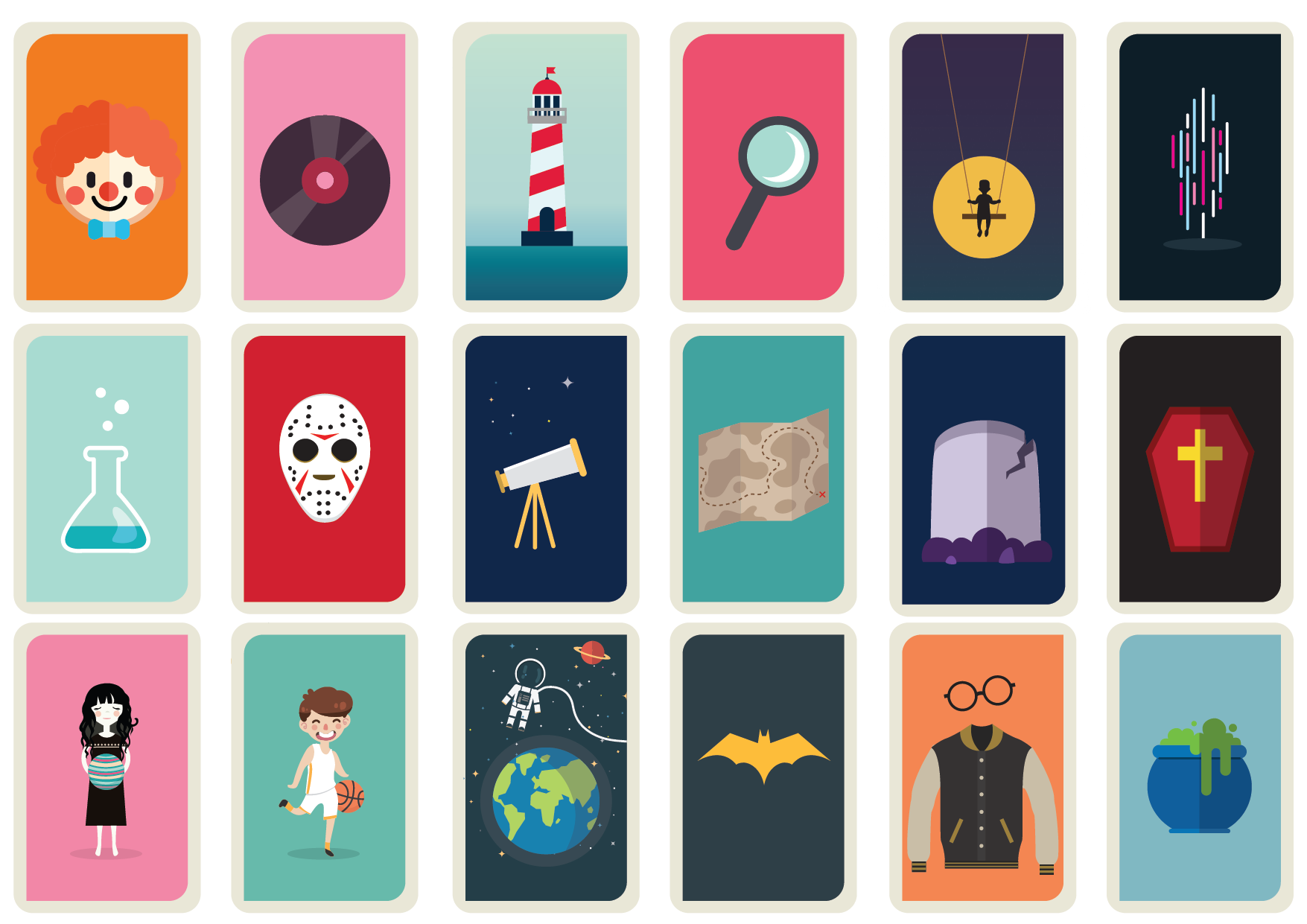
This interaction flow describes how players collaboratively construct an imaginary friend through a sequence of prompts and interpretive choices rather than predefined outcomes. The game begins with a question card that sets a thematic direction, inviting the child to externalize thoughts through a fictional character instead of direct self-reference. Element cards, such as traits and visual archetypes, then act as navigational tools that help the child link their existing knowledge, experiences, and emotions to symbolic forms, gradually shaping the imaginary friend through association rather than instruction. As the character develops, storytelling becomes a shared interpretive moment, where other players and adults engage by asking why, who, and how—seeking understanding rather than validation or correction. The process does not aim to approve, reject, or resolve the story, but to remain open to the child’s perspective, allowing meaning to emerge through dialogue. In this way, the game functions as an interactive system for perceiving and accepting new ideas, transforming play into a space where imagination mediates communication and listening takes precedence over judgment.

Keyword-Based Element Card Development
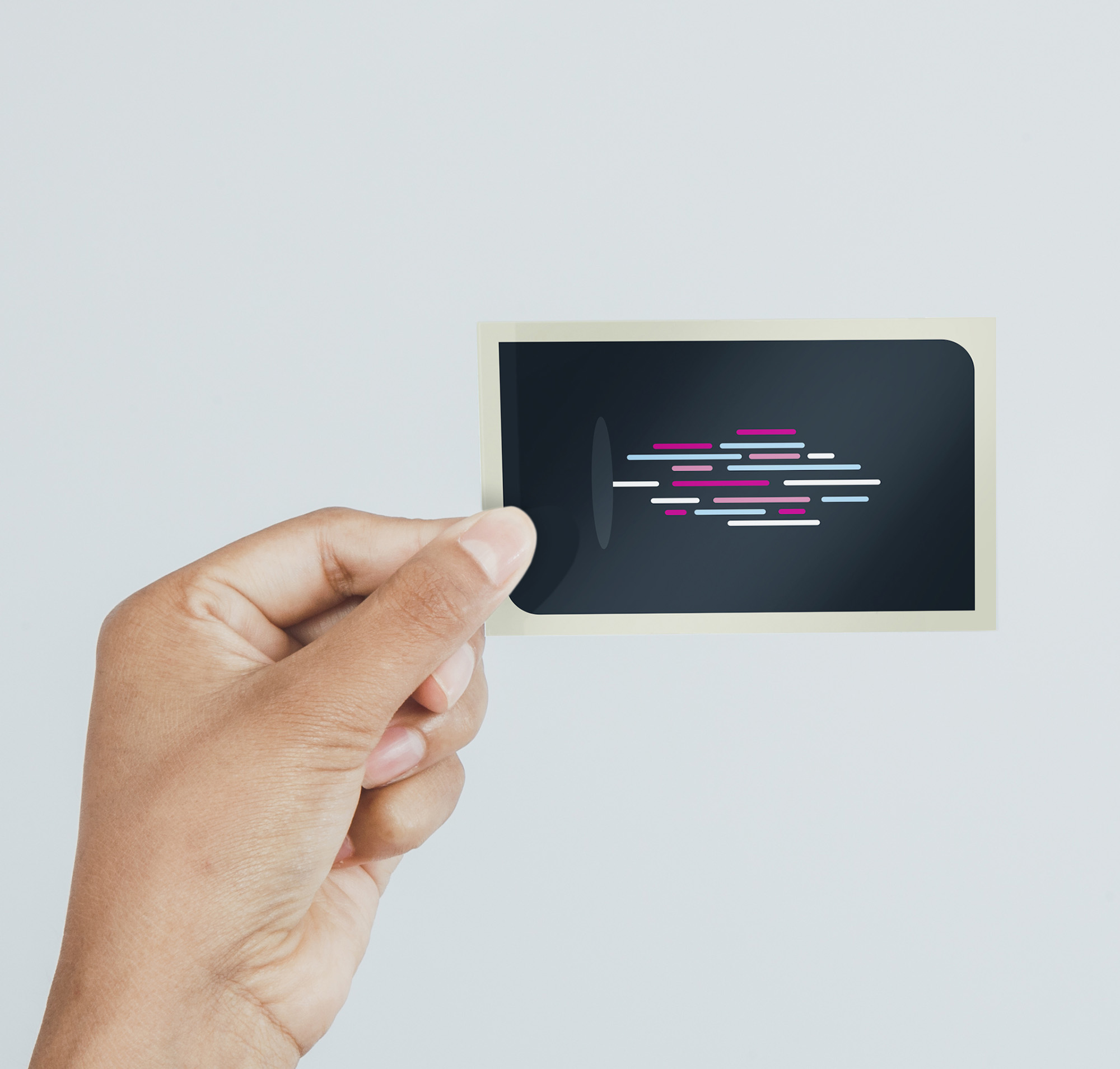
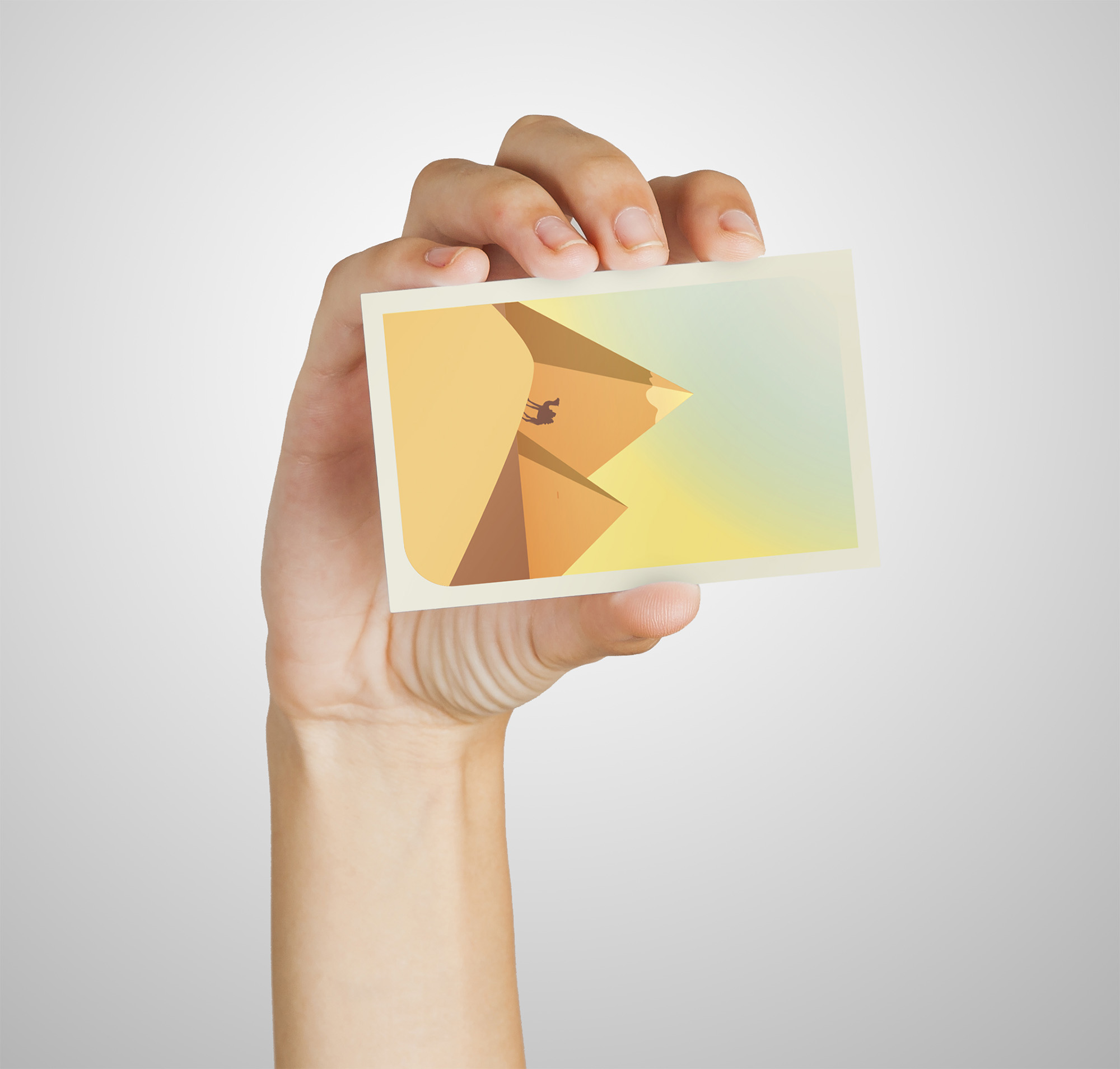
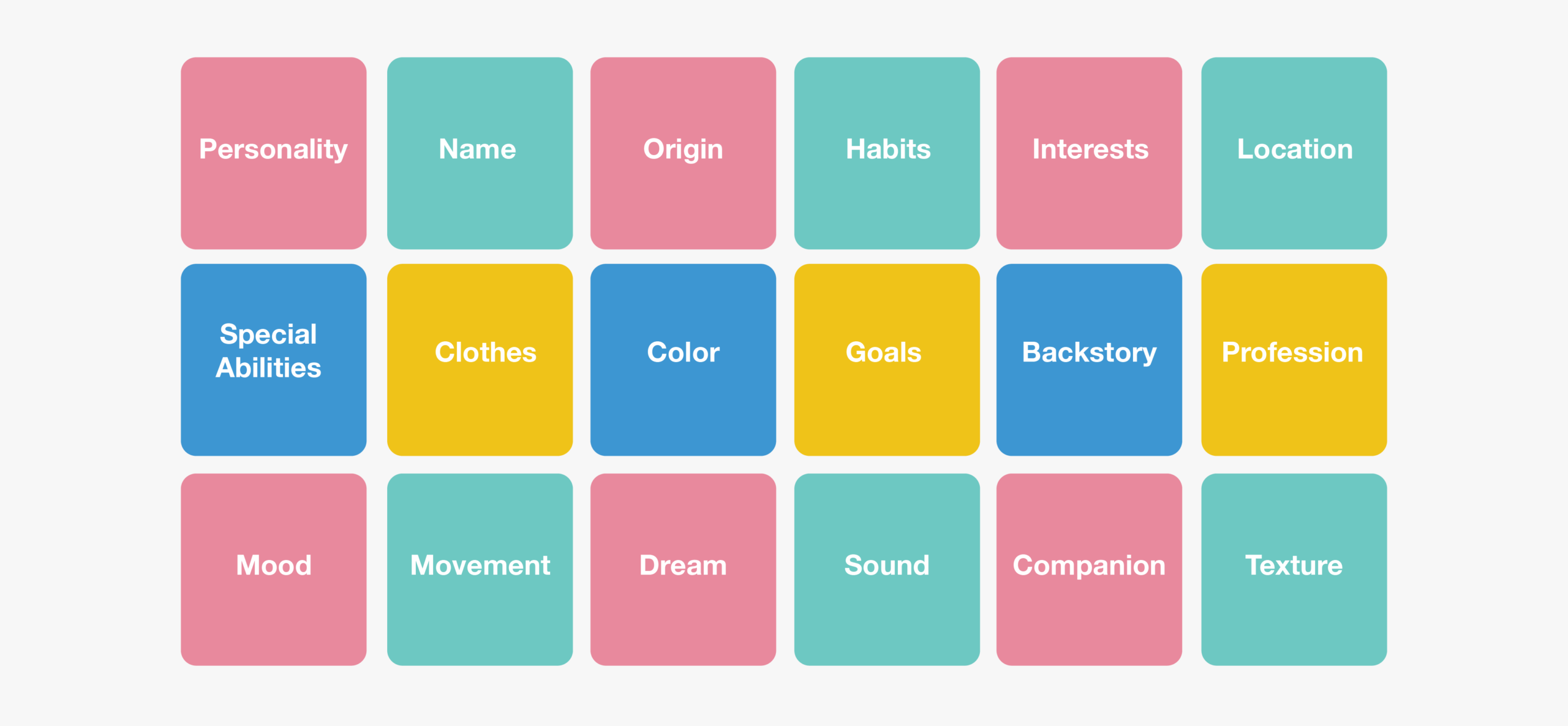
The element cards were developed using a keyword-based approach drawn from how people naturally describe a character in everyday conversation. Words such as personality, habits, interests, location, and color were chosen because they are familiar, flexible, and easy to combine without implying a fixed meaning. For example, combining color and personality might lead one child to imagine a quiet blue character, while another might associate the same combination with strength or sadness. Pairing location with interests could result in a treasure hunter from an isolated island or a character who spends their time collecting shells by the sea. These combinations are not meant to define the character, but to give children a starting point to build their own version of an imaginary friend through association. By selecting elements that remain open and descriptive, the system avoids shaping children’s ideas and instead allows meaning to emerge from their own knowledge, imagination, and storytelling.
How to play Imaginary Friends Card Game
Project Continuation and Outlook
This project is intentionally left open-ended, treating the current card system as a starting structure rather than a finished solution. Each interaction generates stories, interpretations, and perspectives that can be collected and revisited, allowing future batches of element cards to grow directly from audience participation rather than predefined design decisions. As more stories are shared, the project can expand into exhibitions, printed artifacts, or a digital platform where imaginary friends and their narratives are documented, displayed, and reinterpreted by others. By circulating these stories, the project creates a shared space where imagination becomes a collective resource, encouraging people to listen to unfamiliar perspectives and contribute their own. In this way, the work continues to evolve through participation, positioning imagination not as something private or fleeting, but as a living archive shaped by those who engage with it.